Back
Access control and Wi-Fi integrations: seamless check-in and richer workplace data
Employee Experience

Access control and Wi-Fi integrations: seamless check-in and richer workplace data

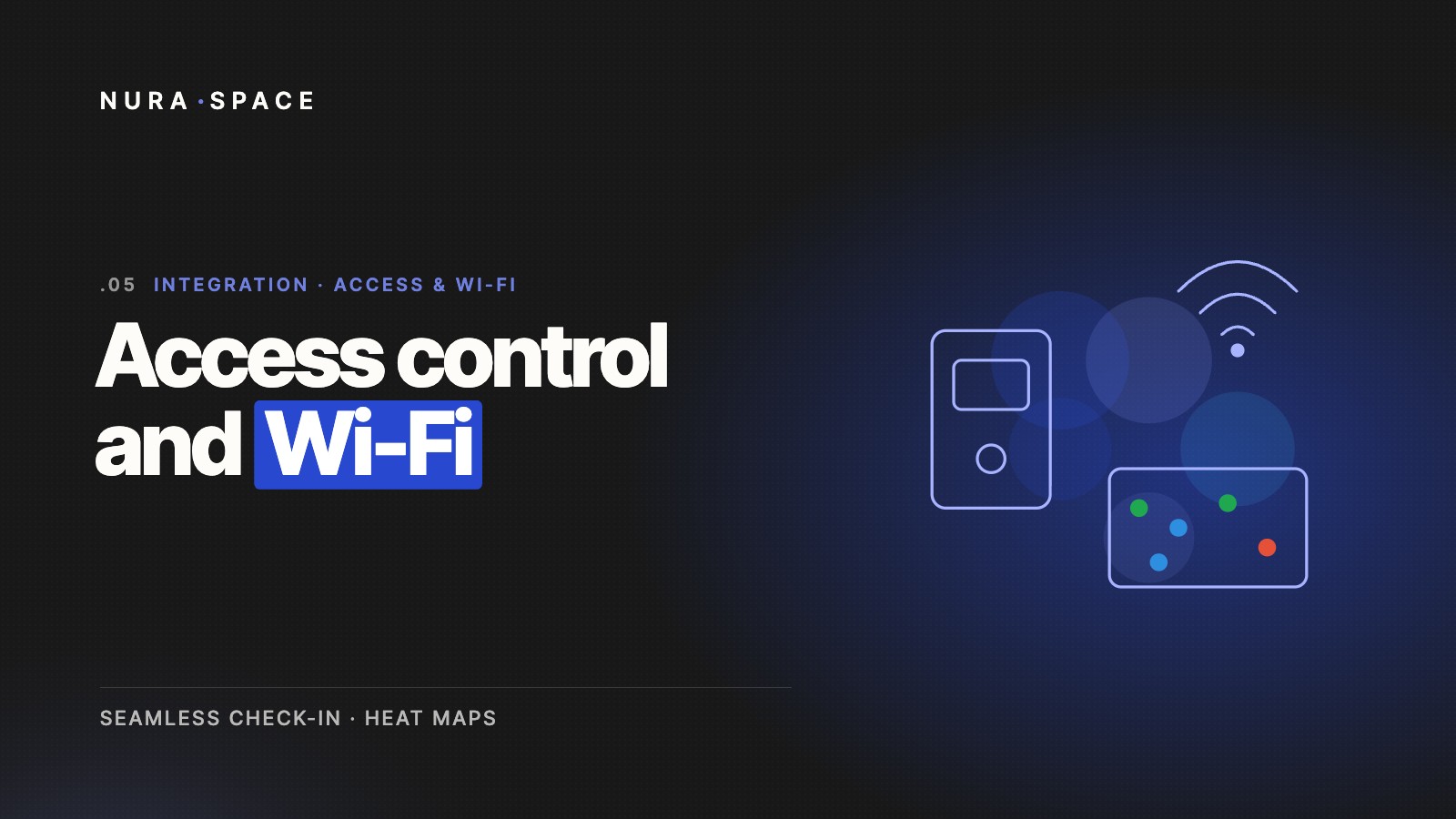
Connecting Nura Space to building access control and Juniper Wi-Fi makes check-in effortless and adds context to workplace data. Here is how it works.

Anton Schiavello
November 6, 2026

In short: Nura Space integrates with security access control systems and with Juniper Wi-Fi. Access control makes check-in seamless, because a badge at the door can confirm someone has arrived. Wi-Fi connectivity and heat mapping show how people move through and use the building. Together with booking data, they give workplace teams a far more complete picture of how space is really used.

Why booking data alone is not enough

A booking shows intent. It does not show whether the person came in, how long they stayed or where they actually worked.

Relying on bookings alone leads to over-provisioned floors and missed patterns. Some people book and never arrive. Others never book and use whatever is free. Neither shows up clearly.

Access control integration

Most organisations already badge people into their buildings. Connecting that system to Nura Space puts those events to work.

  • Seamless check-in: when a person badges into the building, their desk or room booking can be confirmed, so there is no separate step at the desk.
  • Fewer ghost bookings: bookings with no matching building entry can be released for others.
  • Attendance insight: entry data shows real arrival patterns by day, team and site.

Access events also add context to other data. When badge entries, bookings and check-ins line up, workplace teams can see where behaviours converge, and where they do not.

Juniper Wi-Fi integration

Nura Space also integrates with Juniper Wi-Fi networks. Connected devices give an anonymous view of how many people are in an area and how that changes during the day.

That produces heat maps of each floor. They show busy zones, quiet zones and how people move between them. It covers areas that are not bookable at all, such as breakout spaces, kitchens and collaboration zones.

Putting the data together

Each source tells part of the story:

  • Bookings show intent.
  • Access control confirms arrival.
  • Check-ins and desk sensors confirm use of specific resources.
  • Wi-Fi shows presence and movement across the whole floor.

Combined in Nura Space analytics, these sources help teams decide how much space they need, where neighbourhoods should sit and which amenities earn their floor area.

Privacy by design

Wi-Fi and access data are used to understand space, not to monitor individuals. Heat maps are aggregated and de-identified, and each organisation controls which data sources are connected and who can see the results.

Book a demo to see access control and Wi-Fi data working together in Nura Space.

ABOUT THE AUTHOR
Anton Schiavello

Anton Schiavello is co-founder and CEO of Nura Space, the Melbourne workplace management platform founded in 2017. He developed Schiavello's Focus Quiet Room, the project that led to Nura Space, and now leads product, strategy and partnerships, including Nura Vision, winner of Best of NeoCon 2025 Gold.

Enjoyed this read?

Stay up to date with the latest workplace insights, hybrid work strategies and Nura Space news, sent straight to your inbox.